


An increasing number of new services and opportunities are emerging in the hardware aesthetics market, such as fractional facial rejuvenation.What is it, what are the peculiarities of the procedure and what are the results?We will discuss the details of this approach, its consequences, and the characteristics of postoperative recovery.
Characteristics of Fractional Facial Rejuvenation
The hardware treatment method for facial skin - fractional photothermal treatment - is designed to eliminate the upper layer of the skin, which bears the traces of time and exposure to the external environment.Due to this cleansing, the skin will be rejuvenated.Pyrolysis is the destruction of tissue at high temperatures.Partial pyrolysis is not performed completely over the entire surface, but only on micro-problem areas of the face, so the face is treated in multiple sections.
The essence of the procedure is that the device uses a laser beam to affect a small area of the skin, which causes the destruction of the superficial layers, and the beam affects the deeper layers of the skin and activates the production of natural collagen and elastin.The thermal effect of the laser activates cellular processes in the skin, allowing the skin to quickly regenerate and rejuvenate.
The procedure may be painful, and your doctor may use superficial anesthesia to prevent pain.The procedure lasts about an hour; to consolidate the results, the beautician can prescribe a course of several procedures.The results can last anywhere from 1 to several years, depending on the skin care regimen.
result
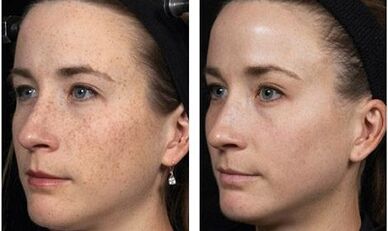
The primary result of fractional facial rejuvenation surgery is skin resurfacing, freeing the face from the upper layers of keratinized skin that can give the face a tired look.
As dead skin disappears, so do dark spots, age spots, fine lines and acne scars.The new skin looks fresher, younger and more active in repair, so the rejuvenating effects are enhanced for several months after surgery.
point and shuttle
There are two different devices for fractional facial rejuvenation: Dot and Fraxel, and their differences are based on different surgical methods.The Dot is a more advanced approach, so procedures using the device are less painful and more effective at addressing common issues with aging skin, but are also significantly more expensive.
The difference between devices is the degree of penetration into the deeper layers of the skin; the Dot has a wider range of effects, for example, it can help treat ingrown toenails or ear, nose and throat conditions.Experienced beauticians can use both devices to achieve the same results.
Indications and Contraindications
Fractional facial rejuvenation surgery is indicated for the appearance of facial wrinkles, "crow's feet" around the eyes, sagging and drooping skin, and removal of scars and age spots.Typically, this surgery is performed on patients over the age of 30.
The procedure is not suitable for pregnant and breastfeeding women, people with cancer, infectious and chronic diseases, and people with acne.
Rehabilitation
Immediately after the procedure, a therapeutic ointment is applied to the face and a bandage is applied; after a few hours, the face begins to become red, swollen, and painful.You should not be exposed to direct sunlight for the first few days after surgery; you must use ointments prescribed by your doctor.The next day, the face will be covered with a layer of scabs that cannot be removed as this may lead to infection and scarring that will not heal.
Skin repair can begin in just one week; it's best not to go out during this time, especially if your face doesn't look good.The face, which remains bright pink for about a month, is extremely susceptible to injury; you need to take careful care of the skin, lubricating it with special ointments and creams.